
Doximity - Medical Network
Doximity, Inc.Medical
4.82.80K Reviews
- Version
- 11.80.0
- Installs
- 500.00K
- Age Rating
- Everyone
Screenshots
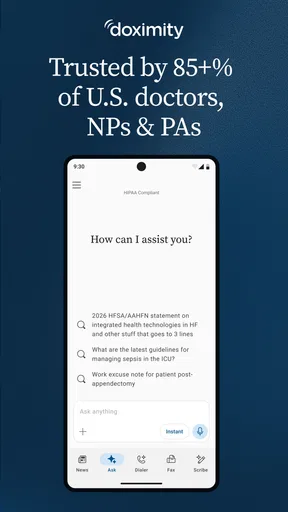
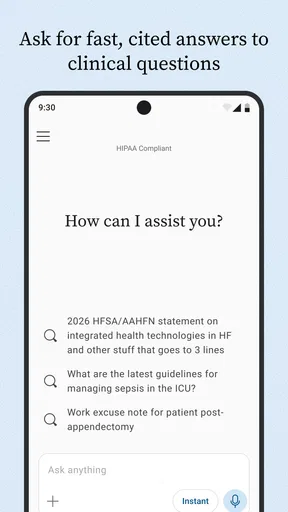
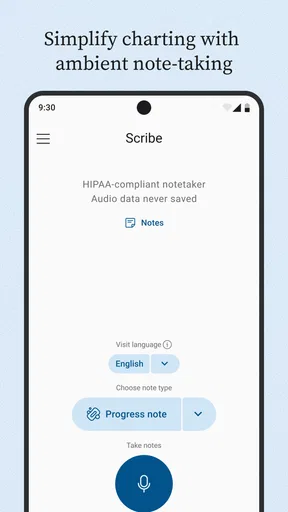
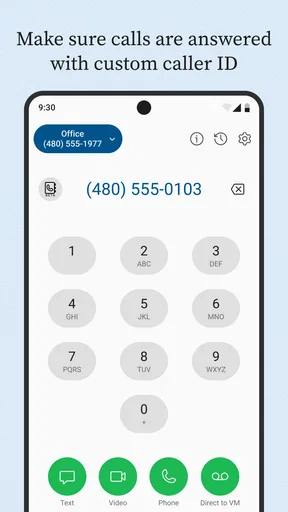
Our Review of Doximity - Medical Network
 Analysis by Appyee
I use Doximity as a professional medical-network app rather than as a general social platform. That distinction matters. Its purpose is to help healthcare professionals connect in a more convenient and secure way, and the experience feels most useful when communication, professional identity, and clinical work already overlap in your day. It is available for free, comes from Doximity, Inc., and is listed for everyone, although its practical audience is clearly people working in healthcare.
After spending time with it, my impression is that the app is less about entertainment and more about reducing small points of friction in a busy professional routine. A physician, nurse practitioner, physician assistant, or another healthcare worker may open it between appointments, during a commute, or while coordinating with colleagues. It is not a replacement for a hospital system, a patient-record platform, or a full communication suite. Instead, it sits beside those tools and focuses on professional connection.
What Doximity is really useful for
The medical category contains many apps that solve one narrow problem: reference material, appointment management, messaging, continuing education, or workplace communication. Doximity takes a broader networking approach. The central idea is that healthcare professionals should be able to find and connect with one another without treating every interaction like a formal administrative task.
That makes the app especially relevant when your work depends on knowing who is available, where someone practices, or how to reach a professional contact efficiently. I would not install it expecting a personal wellness tracker or a patient-facing diagnosis tool. Its value begins with professional identity and continues through the connections built around that identity.
The developer is Doximity, Inc., and the app has been available since February 18, 2011. Its current release is version 11.80.0, with an operating-system requirement of 10. Those details suggest a mature product rather than a short-lived experiment, but they do not automatically make it the right choice for every healthcare worker. A long-running app can still feel unnecessary if your employer already gives you a complete communication environment.
The store describes the service as convenient and secure. In practical terms, I interpret that as an important expectation rather than a reason to abandon normal professional judgment. A healthcare network can make it easier to contact people, but users still need to follow their employer’s rules, professional standards, and privacy procedures. I would never treat a networking app as permission to share sensitive information casually.
Free access changes the decision
The clearest cost advantage is simple: the app is free. That makes trying it relatively low-risk for an individual professional who wants to see whether the network fits a particular workflow. There is no purchase decision to justify before discovering whether your colleagues or relevant contacts are active there.
Free access does not mean every possible professional need is solved. It also does not tell me that the app is better than an employer-provided system, a secure team messenger, or a specialist directory. The sensible way to judge its value is to ask whether it saves enough time or improves enough access in your own work to deserve a place on your phone.
I appreciate that distinction because medical professionals often accumulate apps that sound useful but create more notifications and more places to check. Doximity earns its keep when it becomes a dependable layer for professional connection. If you open it only once every few months and do not need broader networking, free installation alone is not a strong reason to keep it.
How the value appears in daily work
Imagine a clinician finishing a shift and needing to reconnect with a specialist who is not part of the same immediate team. With a conventional approach, that may involve searching an internal directory, asking a colleague for contact details, or switching between several systems. A professional network can shorten that process by putting identity and connection in one place.
Another realistic situation is moving between workplaces or building a referral circle. Instead of treating every new contact as a loose phone entry, you can use a medical-focused network as a more relevant professional context. That is a subtle benefit: the surrounding environment is designed around healthcare work, so the people you encounter are more likely to understand the terminology, schedules, and boundaries of the profession.
The app can also be useful for professionals who do not want their personal phone number to become the default channel for every work-related interaction. I am careful here not to promise a particular communication workflow for every user, but the appeal of a dedicated professional network is clear. It separates professional discovery from a personal social account and can make contact management feel less improvised.
The strongest value is not the download itself; it is the reduction of repeated searching when professional relationships matter. That benefit grows if your work crosses departments, facilities, specialties, or geographic areas. It is smaller if all your contacts already sit inside one tightly managed workplace system.
Useful habits that make the app more worthwhile
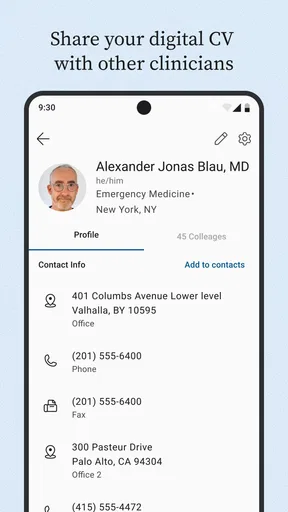
My first practical tip is to treat your profile as a working professional card, not as a profile you create once and forget. Keep the information that helps another healthcare worker recognize and contact you accurate. A neglected profile weakens the very networking advantage the app is meant to provide.
Second, decide in advance what kind of conversations belong in a professional network and what must remain inside an approved clinical or organizational system. This is not just a privacy concern; it is a workflow concern. If you make that boundary clear, you can use Doximity for connection without confusing it with a patient-record environment.
Third, use it as a relationship-maintenance tool rather than only as an emergency directory. A network becomes more valuable when it reflects the people you actually work with and the professional communities you may need later. That is a different mindset from downloading an app only when a contact is difficult to find.
Finally, review notifications early. Medical work already produces a heavy stream of alerts. If the app is allowed to interrupt constantly, its convenience can turn into another source of fatigue. I prefer deciding which updates deserve immediate attention and which can wait until a planned check-in.
Where it compares well with familiar alternatives
Compared with a general social network, Doximity has a clearer professional purpose. A conventional social platform may be better for personal communication, but it mixes audiences and encourages a different style of interaction. For a healthcare worker who wants professional contacts kept separate from family and friends, a medical network is the more natural fit.
Compared with ordinary phone contacts, it offers a more professional setting for discovering and maintaining connections. A phonebook is excellent for people whose details you already have. It is less helpful when you need context around a professional relationship or want to build a network beyond your existing address book.
Compared with a hospital’s internal directory or secure workplace messenger, the choice is more complicated. Internal tools usually win for organization-specific tasks, established permissions, and workflows tied directly to a facility. Doximity may be more useful when the connection extends beyond one employer or when you need a broader professional network. I would use both only when their roles are clearly separated.
Compared with a medical reference app, Doximity serves a different need. Reference software helps answer clinical questions or review information. This app is about people and professional access. If your main goal is drug information, guidelines, calculators, or study material, another medical app is likely a better first installation.
Tradeoffs I noticed before recommending it
The biggest limitation is audience fit. Although the age classification is Everyone, the app is not equally useful to everyone. A patient looking for general health education may find the professional focus confusing or simply irrelevant. Someone outside healthcare may also gain little from a network built around medical work.
There is also a network-effect problem. The app becomes more valuable when the professionals you need are present and active. If your department, referral circle, or local contacts do not use it, the experience can feel like an extra directory rather than a living network. That is not a flaw unique to this service, but it is an important reason to test it against your actual contacts instead of judging it by its concept.
Another tradeoff is separation from formal systems. Convenience can encourage people to move too quickly, especially when a colleague is only a few taps away. I would still confirm that a conversation belongs in the app before using it, particularly when patient information, employment records, or sensitive operational details are involved. The app’s professional setting should support good judgment, not replace it.
I also see a potential attention cost. A network app can become another place for messages, updates, and profile activity. For a professional already managing several work platforms, the benefit of broader access must outweigh the burden of checking one more service. The free price removes a financial barrier, but it does not remove the time cost.
Finally, the app is not a substitute for a complete clinical communication infrastructure. If you need integrated scheduling, chart access, institutional escalation, or a workflow controlled by your employer, an internal platform will usually be the better primary tool. Doximity makes more sense as a complementary network, not as the single system for every professional task.
Who is most likely to get real value
I would recommend trying it first if you are a healthcare professional who regularly works across organizations or specialties. The same is true if you are building a professional network, changing roles, or finding that your existing contacts are scattered across personal phones, old directories, and workplace tools.
It may also suit clinicians who want a clearer boundary between professional and personal communication. A dedicated medical environment can feel more appropriate than adding work contacts to a personal social account. The benefit is strongest when that separation helps you stay organized rather than creating another inbox you rarely open.
Students and early-career professionals may find value in the networking side, provided they approach it with realistic expectations. The app cannot create meaningful professional relationships automatically. It can provide a setting for those relationships, but the quality still depends on how thoughtfully you present yourself and communicate.
Established clinicians should judge it by reach rather than novelty. If your current referral and communication network is already efficient, Doximity may offer only incremental convenience. If you frequently need contacts outside your immediate institution, the broader context may justify keeping it installed.
I would skip it, at least for now, if you are a patient seeking medical advice, a casual user with no healthcare connection, or someone whose employer requires all work communication to stay inside a specific approved system. I would also skip it if you are looking primarily for clinical reference content. Free access is attractive, but an app that does not match your main task is still clutter.
What the numbers suggest, without replacing personal fit
The app has a 4.8 average from around 7,800 ratings, with roughly 2,800 written reviews, and it has passed 500,000 installs. Those figures indicate substantial interest and a generally positive reception, but they should be read alongside the app’s specialized audience. A high average can tell me that many users find the service useful; it cannot tell me whether the people I need are available in my professional circle.
The free price makes a trial easier than with a paid medical tool. Still, I would evaluate it over a normal work period rather than after one quick launch. Check whether it helps you find relevant people, maintain useful connections, and avoid unnecessary switching between personal and professional channels. That is a much better test of value than judging the interface in isolation.
The age rating of Everyone is reassuring from an accessibility standpoint, but it should not be mistaken for a statement about professional suitability. The important question is not whether someone can install it. The important question is whether that person has a legitimate reason to use a healthcare-focused network and understands the boundaries around professional communication.
My buy-or-skip verdict
There is no purchase to make here because Doximity is free, so my verdict is really about whether it deserves your time and attention. For healthcare professionals who need a broader medical network, I think it is worth trying. The combination of professional focus, convenient access, and a mature presence gives it a sensible role beside workplace systems and ordinary contacts.
I would not present it as an all-purpose medical app. Its value is relational, not primarily educational or clinical. It is strongest when you need to connect with healthcare professionals beyond one immediate organization, and weakest when your existing tools already handle those relationships or when your main need is medical information.
My recommendation to a friend would be straightforward: install it if professional networking is part of your work, complete your profile carefully, identify which contacts and conversations belong there, and then judge it by the time it saves. Keep your employer’s approved systems as the authority for sensitive or operational work. If the network does not connect you to people you actually need, uninstalling it is reasonable.
Overall, I see Doximity as a focused professional utility rather than an essential app for every phone. Its free access makes experimentation easy, while its limitations make personal fit especially important. For the right healthcare worker, it can turn scattered professional connections into a more manageable network. For everyone else, the usual alternatives will probably be simpler and more relevant.
Verdict
Strengths of Doximity - Medical Network
- HIPAA-compliant tools support secure professional communication.
- Verified profiles help users identify licensed medical professionals.
- Useful job listings and career resources for healthcare workers.
- Continuing medical education options are available within the platform.
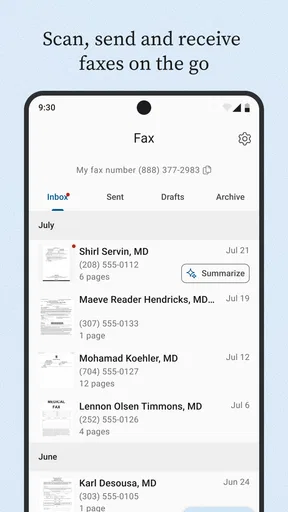
- Faxing and document tools can streamline everyday clinical tasks.
Limitations of Doximity - Medical Network
- Many features are limited to verified U.S. healthcare professionals.
- The app may request extensive professional and account information.
- Some tools require a paid subscription or employer-supported access.
- Notifications can become frequent when multiple features are enabled.
- Its usefulness is limited for patients seeking general medical advice.
Similar Picks in This Category
View All
WebMD: Symptom Checker
WebMD, LLC4.1

Microphone Amplifier
DOSA Apps4.2

Anatomy Learning - 3D Anatomy
3D Medical OU4.5

Period Tracker and Calendar
SimpleInnovation4.9

GoodRx: Prescription Coupons
GoodRx4.8

CVS Health
CVS Pharmacy4.5
Frequently Asked Questions
What is Doximity, and who can use it?
Doximity is a professional social network designed primarily for verified healthcare workers in the United States, including physicians, nurse practitioners, physician assistants, pharmacists, and other medical professionals. It is not a general-purpose social platform for patients. During registration, users may need to provide professional details so Doximity can confirm their identity and eligibility before granting access to its networking, communication, and clinical tools.
Is Doximity free to download and use?
Doximity can generally be downloaded and used without a standard subscription fee for eligible medical professionals. However, some features may depend on professional verification, institutional participation, or the availability of specific services in your area. Mobile data, internet charges, and any optional third-party or workplace-related costs are separate. It is worth reviewing the current terms and privacy information before relying on the app for professional communication.
What features does Doximity offer to medical professionals?
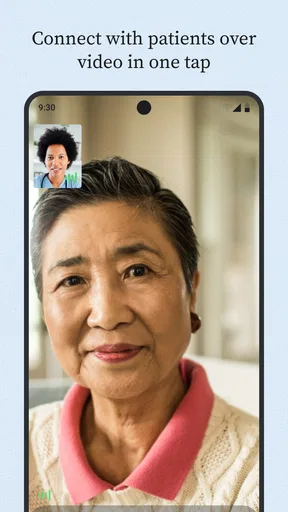
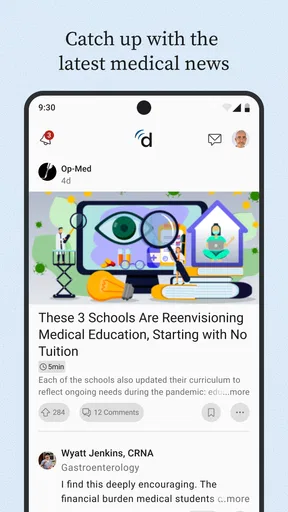
Doximity combines several healthcare-focused tools in one app. Depending on your role and eligibility, you may use it to connect with colleagues, search for medical news and research, manage professional networking, send secure messages, and participate in telehealth visits through compatible services. Some accounts may also access faxing, calling, career resources, or scheduling features. Available tools can vary by location, specialty, and employer.
Can Doximity be used for patient care and telehealth?
Doximity may support professional communication and telehealth workflows, but it should not automatically be treated as a complete replacement for an electronic health record or an organization’s approved clinical system. Telehealth availability and functionality depend on the clinician, practice, patient invitation, and applicable regulations. Before using it with patients, healthcare professionals should confirm that the setup meets their employer’s policies, privacy requirements, documentation standards, and local laws.
Is Doximity secure, and should I share sensitive patient information through it?
Doximity is built for healthcare professionals and promotes secure communication features, but users should still exercise caution with protected health information. Security depends on account protection, device settings, recipient verification, and correct use of the platform. Never share more information than necessary, and follow your organization’s privacy and compliance rules. Enable available security protections, keep the app updated, and contact your institution if you are unsure whether a communication method is approved.
